JONES LAW GROUPYour Lawyers for Life! Personal Injury Law Firm in St. Petersburg
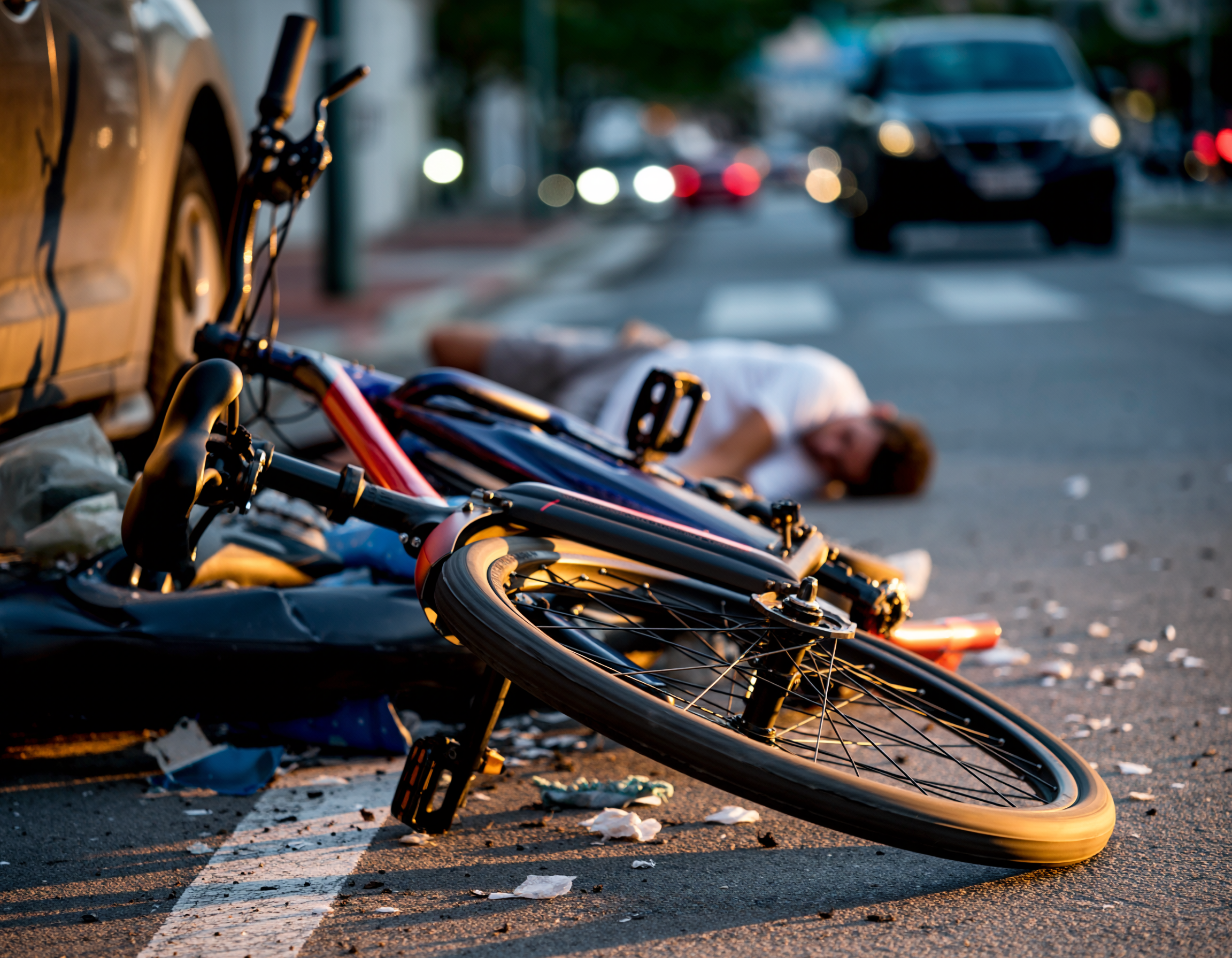
E-bike accidents in Florida are surging. Learn Florida’s e-bike laws, common accident causes, what to do after a crash, and your legal rights as a rider.
Call our personal injury law office directly at (727) 512-9847
At Jones Law Group in St. Petersburg, FL, we would like to hear from you. Contact us for a free personal injury case consultation.
Call our personal injury law office at (727) 512-9847
Get educated on the Florida's personal injury laws and more.
Electric bicycles have transformed how Floridians commute, exercise, and explore their communities. From the bike-friendly streets of St. Petersburg to the sprawling paths of Orlando, e-bikes offer an eco-friendly alternative to cars while making cycling accessible to riders of all fitness levels. But this popularity comes with a troubling trend: e-bike accidents are skyrocketing.
According to the Consumer Product Safety Commission, e-bike-related injuries have increased over 300% since 2019. Emergency rooms across Florida are seeing more severe injuries from e-bike crashes compared to traditional bicycle accidents—and the reasons why might surprise you.
Whether you’re a daily e-bike commuter, considering purchasing your first electric bike, or simply sharing the road with these increasingly common vehicles, understanding Florida’s e-bike laws and safety considerations could prevent a serious accident. Here’s what every Floridian needs to know about e-bike accidents, liability, and legal rights.
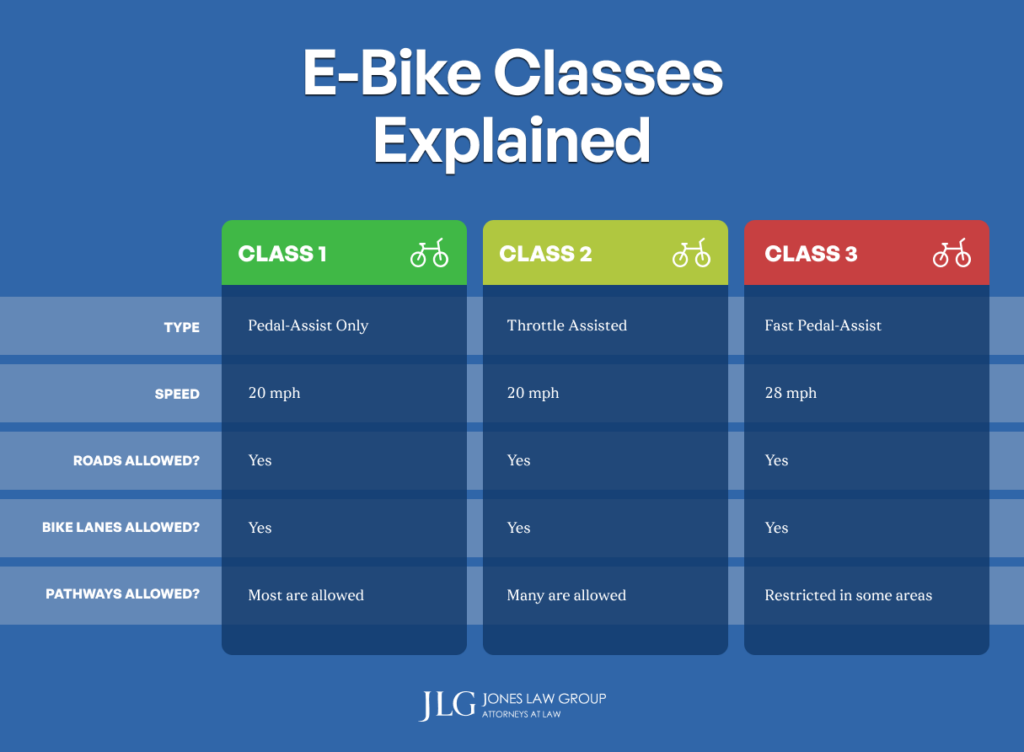
Not all e-bikes are created equal, and Florida law recognizes this by establishing three distinct classes of electric bicycles under Florida Statute 316.003(2). Each class has different speed capabilities, features, and legal restrictions that affect where riders can operate and who may be liable in an accident.
Class 1 E-Bikes provide pedal assistance only—meaning the motor engages only while you’re pedaling. These bikes stop assisting once you reach 20 mph and are generally allowed on bike paths, lanes, and roads throughout Florida.
Class 2 E-Bikes include a throttle mechanism that propels the bike without pedaling, similar to a scooter, but also max out at 20 mph. Some Florida municipalities restrict where these can operate, particularly on multi-use paths shared with pedestrians.
Class 3 E-Bikes are the speed demons of the e-bike world, offering pedal assistance up to 28 mph. These faster bikes face more restrictions and are often prohibited from shared-use paths unless specifically authorized by local ordinance.
Why does this matter for accident victims? Because the class of e-bike involved can affect liability determinations. If you were injured while riding a Class 3 e-bike on a path where they’re prohibited, insurance companies will argue you share fault for the accident—potentially reducing your compensation under Florida’s comparative negligence laws.
Traditional bicycles typically travel 10-15 mph during casual riding. E-bikes routinely hit 20-28 mph with minimal effort. That seemingly small speed difference has massive consequences in accidents.
Physics doesn’t lie: Crash severity increases exponentially with speed. An e-bike traveling 20 mph carries four times the kinetic energy of a traditional bike at 10 mph. When that energy transfers to a human body during a collision, injuries are proportionally more severe.
Heavier vehicles mean harder impacts: E-bikes weigh 50-70 pounds compared to 20-30 pounds for traditional bicycles. That extra weight, combined with higher speeds, results in greater impact forces during crashes.
Stopping distance increases: Even with quality brakes, an e-bike traveling 20 mph requires significantly more distance to stop than a conventional bicycle. Riders accustomed to traditional bike handling often underestimate this difference, leading to rear-end collisions and intersection crashes.
The combination of speed, weight, and rider inexperience explains why Florida emergency rooms report more head injuries, bone fractures, and internal trauma from e-bike accidents compared to conventional bicycle crashes.
Understanding how e-bike accidents typically occur helps riders avoid dangerous situations and establishes liability when crashes happen.
Right-hook accidents top the list of e-bike vs. car collisions. This occurs when a motorist turns right across a bike lane, cutting off an e-bike rider. Drivers misjudge e-bike speed, expecting slower traditional bicycle speeds, and turn into the rider’s path.
Left-turn collisions happen when drivers turning left across traffic fail to yield to oncoming e-bike riders. Again, speed misjudgment plays a major role—drivers think they have time to complete the turn but don’t account for how quickly e-bikes close the distance.
Dooring accidents occur when vehicle occupants open car doors into bike lanes without checking mirrors. E-bikes traveling at higher speeds have less time to react and swerve, making these crashes more severe than with conventional bicycles.
Distracted driving remains a persistent danger. Drivers texting, adjusting GPS, or otherwise not paying attention drift into bike lanes or fail to see e-bike riders in crosswalks and intersections.
Florida’s bike infrastructure wasn’t designed with 20-28 mph e-bikes in mind. Narrow bike lanes, inadequate sight lines at intersections, and poor maintenance create hazardous conditions:
The complexity of e-bike systems introduces failure points that don’t exist on traditional bicycles:
Battery fires represent the most catastrophic product defect. Lithium-ion batteries can experience thermal runaway—a chain reaction that causes the battery to overheat, catch fire, or explode. These fires burn extremely hot and release toxic fumes, causing severe burn injuries and inhalation damage.
Brake failures at high speeds are particularly dangerous. Hydraulic brake systems can leak fluid, mechanical brakes can fail under the stress of stopping heavy e-bikes, and some discount e-bikes come equipped with inadequate braking systems for their weight and speed.
Motor and throttle malfunctions can cause unexpected acceleration or sudden power loss, both of which lead to crashes.
Many e-bike accidents involve riders who underestimate the differences between conventional and electric bicycles:
The actions you take in the moments following an e-bike crash can significantly impact your health outcomes and legal rights. Here’s what you need to do:
Call 911 first. Even if injuries seem minor, adrenaline masks pain and internal injuries aren’t always immediately apparent. Head trauma, internal bleeding, and spinal injuries can present symptoms hours or days later. A police report also creates crucial documentation for insurance claims.
Document everything possible. If you’re physically able, take photos of your e-bike, other vehicles involved, the road conditions, bike lane markings, traffic signals, and your injuries. Get contact information from witnesses. This evidence deteriorates quickly—surveillance footage gets deleted, witnesses forget details, and road conditions change.
Don’t admit fault or apologize excessively. Florida’s comparative negligence laws mean even partial fault reduces your compensation. Stick to facts when talking to police and other parties. Let investigators determine liability.
Preserve your e-bike and equipment. Don’t repair or dispose of your damaged e-bike, helmet, or riding gear. These items serve as critical evidence, especially if product defects contributed to your accident or injuries.
Seek complete medical evaluation. Visit an emergency room or urgent care facility for thorough examination. Some injuries like concussions or internal trauma show delayed symptoms. Creating immediate medical documentation links your injuries directly to the accident.
Report to insurance but be cautious. Notify your insurance company about the accident, but provide only basic facts. Avoid giving recorded statements or signing documents without legal guidance—insurance adjusters look for reasons to deny or minimize claims.
Consult with a personal injury attorney. E-bike accidents involve complex liability questions, multiple potential defendants, and insurance companies with teams of adjusters working to minimize payouts. Most personal injury attorneys offer free consultations and work on contingency, meaning no upfront costs to protect your rights.
Determining who’s legally responsible for an e-bike accident involves analyzing multiple factors under Florida law. Unlike simple car-on-car collisions, e-bike crashes often involve various liable parties.
Motorist liability is most straightforward when a driver’s negligence causes the crash. This includes distracted driving, failure to yield, improper turns, or any violation of Florida’s three-foot passing law (Florida Statute 316.083 requires vehicles to maintain at least three feet of clearance when passing cyclists).
Municipal liability comes into play when poorly maintained roads or defective infrastructure cause accidents. Cities and counties have a duty to maintain reasonably safe bike lanes and paths. However, Florida’s sovereign immunity laws protect government entities in many situations, requiring specific legal strategies to pursue these claims successfully.
Product liability applies when defective e-bike components cause or contribute to accidents. Manufacturers, distributors, and retailers can all face liability for design defects, manufacturing defects, or failure to warn about known dangers. Battery fires, brake failures, and structural defects commonly trigger product liability claims.
Property owner liability may exist if dangerous property conditions cause e-bike crashes. For example, a business allowing debris to accumulate in an adjacent bike lane or failing to maintain safe sight lines at driveway exits could face premises liability claims.
Comparative negligence reduces compensation proportionally to the rider’s fault percentage. If you’re found 20% at fault for an accident, your compensation reduces by 20%. Insurance companies aggressively argue for higher fault percentages on cyclists to minimize payouts, making legal representation valuable in disputed cases.
E-bike riders have the same legal rights as traditional cyclists under Florida law. This means:
However, with these rights come responsibilities. E-bike riders must obey traffic signals and signs, yield to pedestrians on shared paths, use lights when riding at night, and ensure minors under 16 wear helmets.
When accidents occur due to others’ negligence, injured riders can pursue compensation for medical expenses, lost wages, pain and suffering, disability, and property damage. Florida’s four-year statute of limitations for personal injury claims creates a deadline for taking legal action, though earlier action preserves evidence and strengthens cases.
Do I need insurance to ride an e-bike in Florida?
No. Unlike motorcycles and cars, Florida doesn’t require e-bike riders to carry insurance, registration, or licensing. However, many cyclists carry personal injury protection through auto insurance or homeowner’s policies that may provide coverage after accidents.
Are helmets required for e-bike riders?
Florida law requires riders under 16 to wear helmets. Adult riders aren’t legally required to wear helmets, though doing so dramatically reduces head injury severity in accidents. Some local ordinances may have stricter requirements.
What if I was hit while riding on the sidewalk?
Sidewalk riding rules vary by municipality. Some Florida cities allow e-bikes on sidewalks while others prohibit it. Even if you violated a local ordinance, you may still recover compensation under comparative negligence principles if the other party was primarily at fault.
Can I sue if a rental e-bike was defective?
Yes. Rental companies like Lime, Bird, and local operators have a duty to maintain equipment in safe condition. If inadequate maintenance or known defects cause injuries, these companies can be held liable despite user agreements and liability waivers.
How long do I have to file a legal claim?
Florida’s statute of limitations allows four years for personal injury claims and two years for wrongful death cases. Claims against government entities have shorter notice requirements. However, evidence preservation is crucial—waiting months or years to take action significantly weakens cases.
While understanding your legal rights after an e-bike accident is important, prevention remains the best strategy. Defensive riding techniques, proper equipment maintenance, and awareness of common crash scenarios help riders avoid dangerous situations.
Wear a quality helmet on every ride, use lights and reflectors when visibility is reduced, maintain your e-bike’s brakes and tires regularly, ride predictably and signal intentions clearly, and stay alert for driver behavior suggesting inattention or aggression.
E-bikes offer tremendous benefits for Florida riders, but the speed and power that make them appealing also create serious risks. Understanding these risks, knowing your legal rights, and taking appropriate action after accidents protects both your health and your financial recovery.
If you’ve been injured in an e-bike accident in Florida, Jones Law Group can help. Our personal injury attorneys understand the unique legal issues surrounding electric bicycle crashes and have over 20 years of experience protecting injury victims throughout Pinellas County, Tampa Bay, and across Florida. Call (727) 571-1333 for a free consultation, or visit our bicycle accident practice page to learn more about your rights.
Disclaimer: This article provides general information about e-bike accidents and Florida law. It does not constitute legal advice. For guidance on your specific situation, consult with a qualified personal injury attorney.

There’s more to a personal injury case than compensation for tangible losses, such as the cost of medical treatment and the money a victim loses because they can’t work. There are also losses that don’t lend themselves to easy calculation. For example, a victim can’t produce receipts to show how much pain and suffering they’ve […]
Rely on a trustworthy personal injury attorney from Jones Law Group to avoid making expensive mistakes during your truck accident case. Summary At Jones Law Group, we know just how horrific the results of a truck accident can be. Truck drivers violate federal regulations on a regular basis, and often cause terrible collisions due to […]

Even though the Sturgis, ND motorcycle rally might get a lot more press, Daytona’s Bike Week is no slouch. It draws an average of 400,000 people each year. Unfortunately, that dramatically increases the risks of accidents that can result in severe injuries and tragic fatalities. In 2022, Daytona Beach police reported more than 100 wrecks […]
By: Heath C. Murphy + – Overtime and Wage Claims So your boss has handed you big promotion. He has made you a manager and has agreed to pay you a salary. After awhile you realize that your pay is about the same. You do the same job that you performed prior to the promotion. […]

By: Heath C. Murphy + – Personal Injury Several times per year I encounter someone who tells me that they suffered food poisoning because of a meal that they ate at a particular restaurant. Usually the person has suffered through some very real physical discomfort, but has suffered at home. This is good and bad. […]
If you’ve been hurt in a slip-and-fall accident, it’s only natural to think of what your potential legal options may be. It’s very likely you’ve never been in this type of situation before, and you’re wondering what to expect. It’s important to know that you must make sure your rights are protected at all times. […]
Speak with us before time runs out! In Florida, you have a limited window to file a personal injury case, so speak to an Attorney today.
Call our personal injury law office directly at (727) 512-9847

Jones Law Group is a dedicated personal injury lawyer in St. Petersburg, FL, serving the Tampa Bay area since 2006. Our experienced attorneys specialize in car accidents, slip and fall cases, employment law disputes, construction law issues, and overtime wage claims, fighting for maximum compensation on a contingency fee basis. Contact us for a free consultation to discuss your case.
Call our personal injury law office at (727) 512-9847
© Copyright 2006–2025 Jones Law Group Attorneys at Law. All rights reserved. Privacy Policy Terms of Use
Attorney Advertising.
The information on this website is for general information purposes only. Nothing on this site should be taken as legal advice for any individual case or situation. This information is not intended to create, and receipt or viewing does not constitute, an attorney-client relationship. Past results do not guarantee similar outcomes.
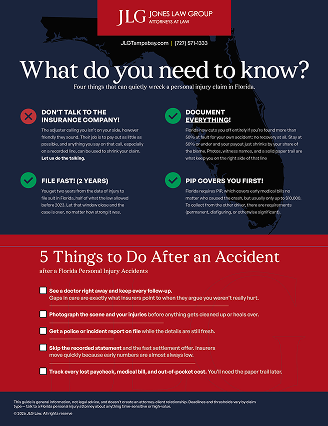
See the things you NEED TO DO after your accident. Get the 5 to-do's sent directly to your email.