JONES LAW GROUPYour Lawyers for Life! Personal Injury Law Firm in St. Petersburg
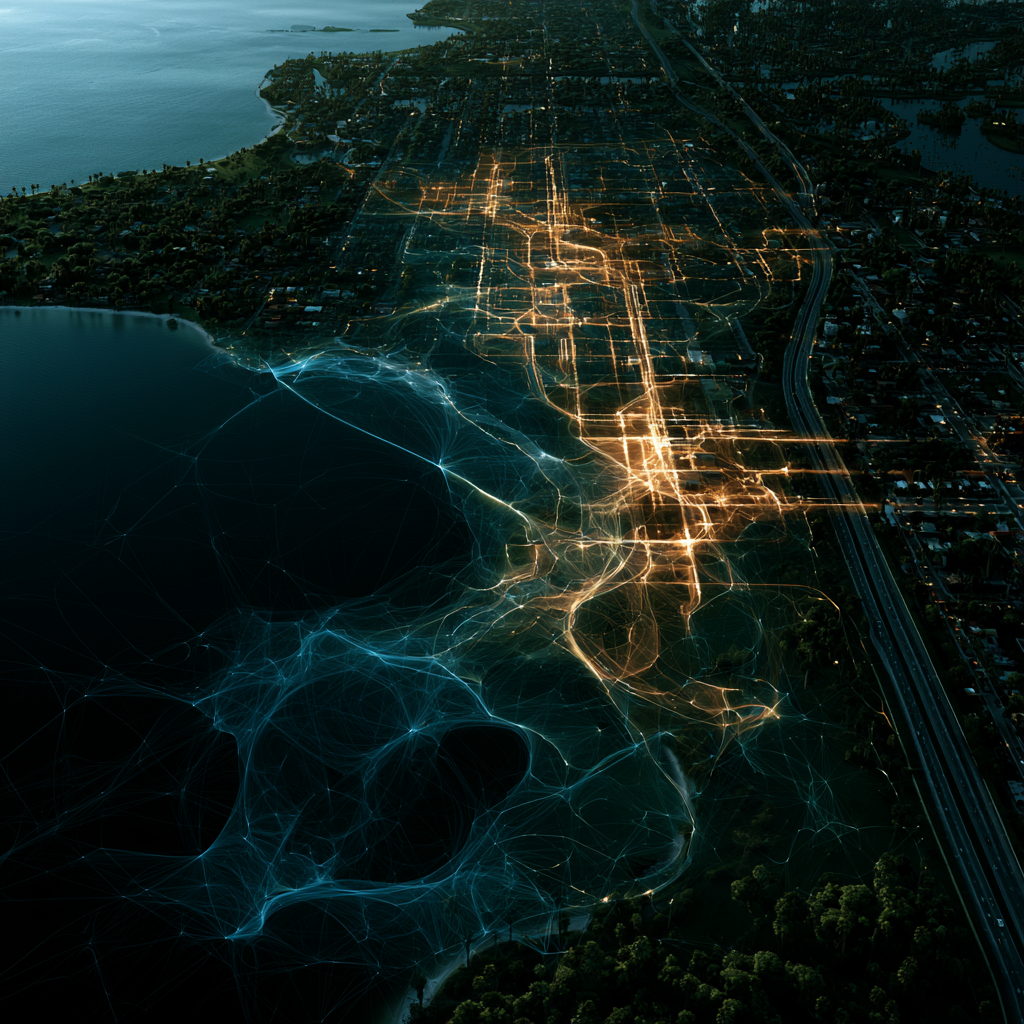
The Wall Street Journal once named St. Petersburg the most dangerous city in America for bicyclists. The crashes haven’t spread evenly. They concentrate at specific intersections: 34th Street and Fairfield Avenue, 34th Street and 5th Avenue South, 4th Street North and 5th Avenue North, and the Pinellas Trail’s road crossings. This guide breaks down the intersection-level data, who’s getting hit (commuters, e-bike riders, delivery cyclists, tourists), and what to do if you go down on a St. Pete street.
Call our personal injury law office directly at (727) 512-9847
At Jones Law Group in St. Petersburg, FL, we would like to hear from you. Contact us for a free personal injury case consultation.
Call our personal injury law office at (727) 512-9847
Get educated on the Florida's personal injury laws and more.
By Bobby Jones, Esq. | Published June 16, 2026
The most dangerous bicycle crash hotspots in St. Petersburg are the intersections at 34th Street / Fairfield Avenue (where the Pinellas Trail exits onto U.S. 19), 34th Street and 5th Avenue South, 4th Street North at 5th Avenue North, 4th Street North at 9th Avenue North, 38th Avenue North at 4th Street (U.S. 92), U.S. 19 at 22nd Avenue North, U.S. 19 at 38th Avenue North, and the Pinellas Trail’s at-grade road crossings at 22nd Avenue North, Central Avenue, and Tyrone Boulevard. A 7-year Tampa Bay Times analysis identified 11 specific intersections that produced 158 bicycle crashes, 157 injuries, and 2 fatalities, and almost none of them had dedicated bike infrastructure.
This guide breaks down where St. Petersburg bike crashes actually happen, who is getting hit, why these specific intersections keep producing collisions, and what to do if you are injured. If you were hit while riding a bicycle or e-bike anywhere in St. Petersburg or Pinellas County, call Bobby Jones at (727) 571-1333 for a free consultation. No fee unless we win.
St. Petersburg’s bike-friendliness narrative and its bike-crash reality do not always line up. The city has invested in protected lanes, the Pinellas Trail, the Bayway Trail, the Skyway Trail, and several other bikeway connectors. Downtown has decent bike infrastructure. The Pinellas Trail itself is one of the safer riding environments in the state.
But the crash data is unambiguous. In 2021, the city recorded 389 pedestrian and bicycle accidents. Those produced 62 incapacitating injuries and 16 deaths. The same year, pedestrian and bicycle fatalities in St. Petersburg jumped 77.8% over the prior year. Severe injuries jumped 44.2%. Total accidents jumped 18.2%. The city is roughly 1.2% of Florida’s population by headcount, but it produced 2.4% of the state’s pedestrian and bicycle accidents and 2.8% of the pedestrian and cyclist injuries.
The improvement trend that Forward Pinellas reports countywide (fatal and serious-injury crashes dropping from 1,119 in 2016 to 696 in 2024) has come slower for cyclists specifically. In 2025, Pinellas County recorded approximately 800 bicycle crashes, with more than a dozen cyclist deaths. St. Petersburg accounts for the largest share within the county.
Bike crashes in St. Petersburg cluster at a small number of intersections rather than spreading evenly across the city. Most share a common profile: multi-lane high-speed arterials, frequent commercial driveways, long signal cycles, and either no bike infrastructure or paint-only lanes adjacent to fast-moving vehicles. Here are the specific intersections that show up repeatedly in crash data.
This is the single most consistently cited bicycle crash intersection in St. Petersburg. The Pinellas Trail exits the protected trail corridor here and feeds cyclists directly onto U.S. 19, one of the highest-speed multi-lane arterials in the state, with no dedicated bike infrastructure on either side. Cyclists transitioning from trail to road encounter 45+ mph vehicle traffic, frequent right turns into commercial driveways, and high-volume cross-traffic. The intersection is less than a block from the I-175 exit, which adds high-speed merging traffic to the mix.
5th Avenue South is a major east-west route through southern St. Petersburg, and its intersection with 34th Street/U.S. 19 is one of the busiest in the city. Heavy commercial traffic, frequent left turns, and an absence of dedicated bike infrastructure on either road produces a steady stream of left-cross and right-hook crashes between motor vehicles and cyclists.
4th Street North is one of St. Petersburg’s busiest north-south arterials. The intersection with 5th Avenue North sits in a high-volume mixed-use zone, with commercial traffic, transit activity, and frequent pedestrian and cyclist crossings. The Tampa Bay Times intersection analysis flagged this area as one of the worst per-mile bike-crash locations in the city.
Another concentration point along 4th Street North. 9th Avenue North carries hospital traffic, residential traffic, and east-west commercial flow, and the intersection’s signal timing and turn-lane geometry produce a recurring pattern of cyclist injury crashes. This corridor sits near several medical facilities, which means many of the cyclists hit here are evaluated at Bayfront Health St. Petersburg within minutes of the crash.
Multiple sources document this intersection as a hotspot, with one practitioner-reported figure of approximately 20 cyclist or pedestrian injuries in a single recent year. The combination of 4th Street’s commercial density, the 38th Avenue arterial cutting east-west, and the wide multi-lane crossings produces both high-speed and turning crashes.
The U.S. 19 corridor through northern St. Petersburg includes several documented bicycle and pedestrian fatality intersections, and 22nd Avenue North is one of them. The same intersection is also where the Pinellas Trail crosses U.S. 19 (see the trail crossings section below), which adds at-grade trail traffic to the high-speed road mix.
One practitioner-reported figure cited nearly 60 accidents at this intersection alone in a single recent year. Most of those are not bicycle-specific, but the intersection is one of the worst overall crash locations in the U.S. 19 corridor and produces a steady share of cyclist injury crashes when bicycle traffic is present.
Central Avenue runs east-west across the entire city. Forward Pinellas has identified two specific high-injury hotspots along its corridor. Downtown segments have benefited from protected bike lanes and the SunRunner bus rapid transit corridor, which has reduced some crash patterns. Mid-city and west-of-downtown stretches still produce regular cyclist injury crashes, often in the evening when visibility drops and restaurant and bar traffic increases.
The Pinellas Trail is generally safer than riding on St. Petersburg’s roads. The trail separates cyclists from vehicle traffic for most of its 47 miles. But it crosses many major roads at grade, and those crossings produce a distinct category of bike-vehicle crashes.
The trail crosses 22nd Avenue North as a marked pedestrian/cyclist crossing. St. Petersburg Police Department crash reports document multiple cyclist injury crashes here, including life-threatening injuries when drivers fail to yield to cyclists in the crossing. Cyclists exiting the trail onto 22nd Avenue North then face high-speed vehicle traffic with no bike lane.
Discussed above as a road intersection, this is also the worst Pinellas Trail crossing in the city because cyclists are transitioning directly into U.S. 19 traffic.
The trail’s Central Avenue crossing is in a high-pedestrian, high-cyclist zone. Recent infrastructure improvements have helped, but conflicts between cars turning across the crossing and cyclists in the crosswalk continue.
Tyrone Boulevard is a major west-side arterial connecting to the Tyrone Square Mall area and the beach access roads. The Pinellas Trail crossing here mixes high-volume vehicle traffic with cyclists transitioning between trail and road.
St. Petersburg bicycle crashes are not concentrated in a single rider population. Several distinct rider types each face their own crash patterns.
Cyclists who ride to work, particularly downtown and university-area workers, face peak-hour crashes during morning and evening commutes. Left-cross crashes (where a driver turns left across the cyclist’s path) and right-hook crashes (where a driver turns right across a cyclist proceeding straight) are the most common patterns. Commuter cyclists tend to be experienced riders, but experience does not protect against driver inattention at signalized intersections.
Weekend recreational riders concentrate on the Pinellas Trail, beach connector routes, and the Skyway approaches. Their crash exposure is heaviest at trail-road crossings (where the trail meets a major street at grade) and on the Bayway Bridge and Skyway approaches where they share road space with high-speed vehicle traffic. Group rides increase visibility but also increase the consequences when one rider goes down.
The fastest-growing segment of bicycle crash exposure. Class 1 and Class 2 e-bikes are now common on the Pinellas Trail, in downtown St. Pete, and on beach roads. Higher speeds (often 20 to 28 mph under pedal assist), heavier bikes, and many riders who have not ridden a traditional bicycle in years produces crashes with more serious injuries than traditional cycling. Florida’s e-bike regulatory landscape is still evolving, and the legal framework for crashes involving e-bikes is more complex than traditional bike cases.
DoorDash, Uber Eats, and other delivery platforms have produced a growing population of bike and e-bike delivery couriers, particularly in the downtown St. Petersburg restaurant district. Delivery cyclists face elevated risk because they ride in all weather, in traffic, often at peak meal-service times, and frequently with phones mounted for navigation. The insurance picture in delivery crashes is uniquely complex because rideshare-style platform insurance may or may not cover the rider depending on the precise moment of the crash.
USF St. Petersburg and other downtown institutions produce a population of student riders concentrated in the downtown and waterfront areas. Student riders often skew toward less experience, less bike infrastructure familiarity, and higher rates of nighttime riding.
Downtown St. Petersburg’s Vinoy Park area, the St. Pete Pier, and the beach connector routes generate a steady volume of tourist cycling, often on rental or hotel-issued bikes. These riders typically face elevated crash risk because they are unfamiliar with the road network, the specific intersection patterns, and Florida traffic conventions.
The dangerous bike intersections in St. Petersburg share a recognizable profile. Most of them feature several of the following:
Bicycle crash claims have specific evidence and procedural concerns that differ from car-vs-car crashes. If you were hit on your bike:
The city is part of the Vision Zero Network and has a Vision Zero plan targeting a long-term goal of zero fatal crashes. Forward Pinellas, the county metropolitan planning organization, received a $400,000 USDOT Safe Streets and Roads for All grant in 2025 to update the Safe Streets Pinellas Action Plan, including 10 near-miss cameras at to-be-determined intersections. The SunRunner bus rapid transit corridor along 1st Avenue North and 1st Avenue South has reduced certain crash patterns adjacent to Central Avenue. St. Petersburg Police Department has run a High Visibility Enforcement program targeting pedestrian and cyclist safety zones for over seven years.
None of this changes the immediate legal landscape for a cyclist who was just hit, but it does affect the documentary record and the design-related arguments available in catastrophic cases. Targeted infrastructure improvements at specific hotspots, when delayed or ignored, can become evidence of foreseeability in serious injury claims.
Bobby Jones is a Stetson Law graduate, an Air Force veteran, and has practiced personal injury law in Tampa Bay for more than 20 years. Jones Law Group has recovered more than $50 million for clients across car, motorcycle, bicycle, e-bike, and pedestrian injury cases. Our office at 5622 Central Avenue, St. Petersburg, FL 33707 handles bicycle crash claims throughout St. Petersburg, Pinellas County, Tampa, Clearwater, Largo, and across Florida. We routinely work cases involving the specific intersections discussed in this article.
The intersection of 34th Street / U.S. 19 at Fairfield Avenue is the most consistently cited bicycle crash hotspot in St. Petersburg. The Pinellas Trail exits onto U.S. 19 at this location, feeding cyclists directly into high-speed traffic with no dedicated bike infrastructure. Other top-ranked intersections include 34th Street and 5th Avenue South, 4th Street North at 5th Avenue North, and the Pinellas Trail crossing at 22nd Avenue North.
St. Petersburg accounts for the largest share of Pinellas County’s bicycle crashes, with the county recording 805 bike crashes in 2024 per the Florida Crash Dashboard. In 2021, St. Petersburg specifically recorded 389 pedestrian and bicycle accidents, with 62 incapacitating injuries and 16 deaths.
Yes. The Wall Street Journal in 2018 ranked St. Petersburg the most dangerous U.S. city for bicyclists based on multi-year crash analysis. The Tampa Bay region has continued to rank in the Top 10 most dangerous U.S. metropolitan areas for people walking per Smart Growth America.
Florida traffic law generally requires motorists to yield to cyclists already in a marked crosswalk or trail crossing, but cyclists must confirm vehicles have stopped before entering the roadway. The specific rules vary by crossing type. At signalized crossings, the party who violated the signal is generally at fault. Under HB 837’s 51% bar, a cyclist found more than 50% at fault recovers nothing.
Possibly. Florida’s Personal Injury Protection (PIP) coverage extends to the policyholder and certain household members when they are injured as a pedestrian or cyclist, not just when they are in a vehicle. The exact coverage depends on the policy terms. If you were hit by an uninsured or underinsured driver, your auto policy’s uninsured/underinsured motorist coverage may also apply. An attorney can identify all available coverage layers.
Florida does not require adult cyclists to wear helmets, so not wearing one is not negligence per se. However, in cases involving head injuries, the defense may argue that the absence of a helmet contributed to the severity of the injury. This is a comparative fault argument, not an automatic case-killer, but under HB 837’s 51% bar it carries more risk than it used to. Children under 16 are required to wear helmets in Florida.
Hit-and-run bicycle crashes are unfortunately common. Even when the driver is never identified, you may still recover damages through your own uninsured motorist coverage (if you carry it on an auto policy) or through other available sources. Report the crash to law enforcement immediately and contact an attorney to identify available coverage.
Two years from the date of the crash under Florida Statute § 95.11 as amended by HB 837, for any crash on or after March 24, 2023. Crashes before that date are governed by the old four-year rule. Wrongful death claims arising from cyclist fatalities are also two years from the date of death under § 95.11(4)(d).
For minor injuries with clear liability and quick recovery, you may be able to handle the claim yourself. For any case involving serious injuries (head trauma, fractures, road rash with scarring), disputed fault, hit-and-run, or significant medical bills, an experienced Florida bicycle accident attorney is the difference between a fair recovery and a lowball offer. Most Florida injury attorneys, including Jones Law Group, work on contingency, so the consultation costs nothing and there is no fee unless the case wins.
If you were hit while riding a bicycle or e-bike anywhere in St. Petersburg, at one of the intersections discussed in this article or anywhere else, talk to an attorney while the evidence is still fresh. Bicycle crash cases rely heavily on time-sensitive evidence: surveillance video, witness statements, helmet and bike condition, photographs of the scene before it changes. Every week that passes makes the case harder.
Bobby Jones and the team at Jones Law Group have recovered more than $50 million for injured Floridians. The consultation is free, confidential, and carries no obligation.
Call (727) 571-1333 or email [email protected].
This article is for general informational purposes only and is not legal advice. Crash statistics cited are drawn from public reports including the Tampa Bay Times, Forward Pinellas, the Florida Crash Dashboard, the Wall Street Journal, Smart Growth America, and St. Petersburg Police Department crash records. Reading this article does not create an attorney-client relationship with Jones Law Group. Every case is different, and past results do not guarantee a similar outcome in any future case. For advice about your specific situation, contact a licensed Florida personal injury attorney.
According to the National Highway Traffic Safety Administration, overall traffic fatalities are becoming less frequent. However, that is no thanks to truck accidents. The NHTSA predicts an increase in truck accident deaths despite the overall decrease. When truck accidents aren’t deadly, they’re often still incredibly damaging. To complicate matters, survivors don’t often have a simple […]

By: Heath C. Murphy + – Personal Injury I have blogged about the dangers of suffering a head injury and the cognitive and emotional impairments that can be caused by head injuries, however new studies indicate a link between head injuries and early onset dementia. Some of the more common causes of traumatic brain injuries […]

Florida is home to some of the world’s most popular theme parks, as well as beautiful beaches and tropical weather. With so many vacationers, some Florida cities have become a popular destination for bed bugs as well. Bed bugs are tiny parasitic insects that are excellent at hiding, and can easily squeeze into luggage, clothing, […]

Florida Laws Regarding Passengers on a Motorcycle Florida has very relaxed laws on the use of motorcycles. As far as passengers are concerned, they must occupy either a separate seat or a seat meant for two riders and they must have footrests dedicated solely to their use.[1] There is no minimum age requirement for passengers, […]

So you have been involved in an accident. You have been to the hospital and referred to a specialist. You have had your MRIs and CT Scans. You have been referred to a physical therapist or a chiropractor who tells you that you need to treat on a regular basis. You start to feel a […]
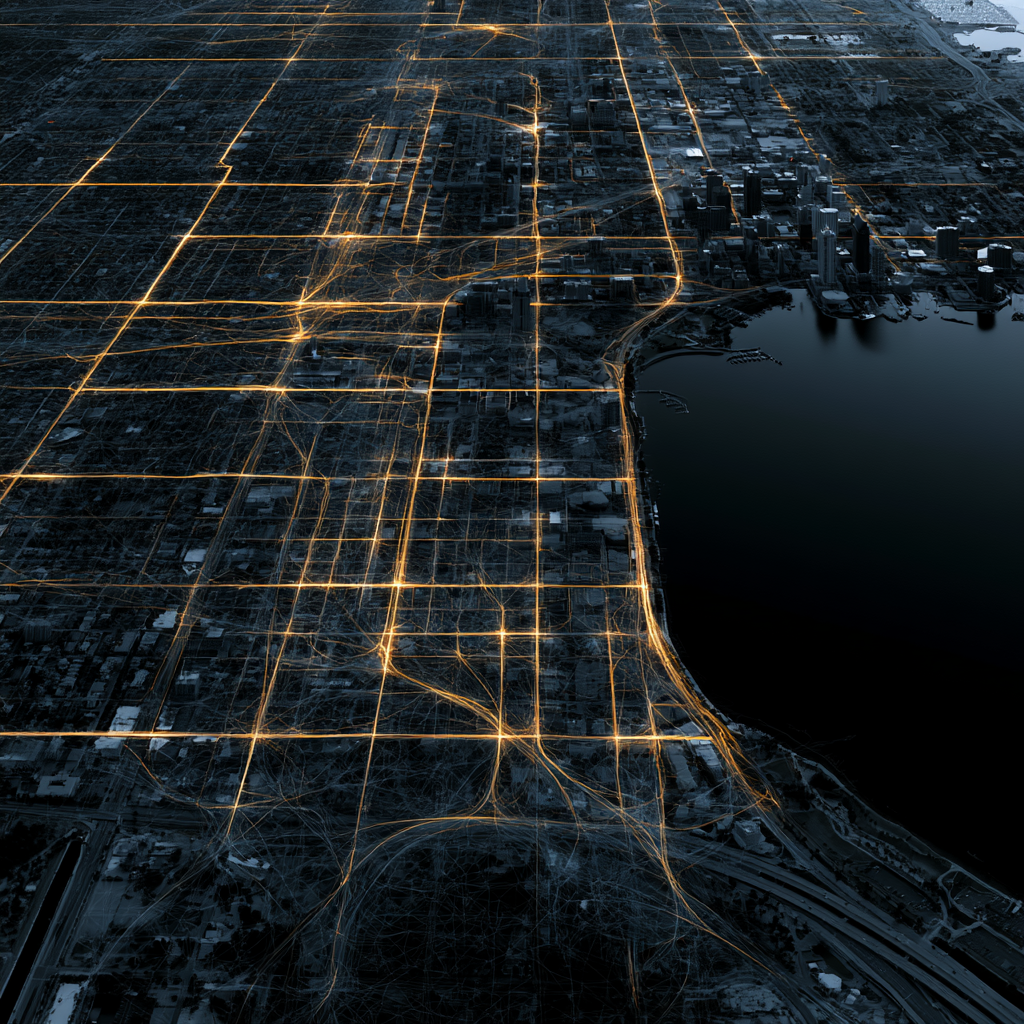
U.S. 19 isn’t just dangerous, it’s the deadliest single road in any Florida county, with 94 fatalities recorded from 2020 through 2022. But it’s not alone. 4th Street, 34th Street, Gulf Boulevard, Central Avenue, Bay Drive, and Ulmerton Road all carry an outsized share of Pinellas County’s fatal and serious-injury crashes. This guide breaks down the crash data, the specific hotspots, where cyclists face the worst risk on the Pinellas Trail crossings, and what to do if you’re injured on one of them.
Speak with us before time runs out! In Florida, you have a limited window to file a personal injury case, so speak to an Attorney today.
Call our personal injury law office directly at (727) 512-9847

Jones Law Group is a dedicated personal injury lawyer in St. Petersburg, FL, serving the Tampa Bay area since 2006. Our experienced attorneys specialize in car accidents, slip and fall cases, employment law disputes, construction law issues, and overtime wage claims, fighting for maximum compensation on a contingency fee basis. Contact us for a free consultation to discuss your case.
Call our personal injury law office at (727) 512-9847
© Copyright 2006–2025 Jones Law Group Attorneys at Law. All rights reserved. Privacy Policy Terms of Use
Attorney Advertising.
The information on this website is for general information purposes only. Nothing on this site should be taken as legal advice for any individual case or situation. This information is not intended to create, and receipt or viewing does not constitute, an attorney-client relationship. Past results do not guarantee similar outcomes.
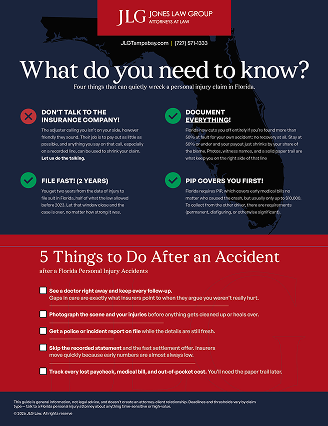
See the things you NEED TO DO after your accident. Get the 5 to-do's sent directly to your email.